An Island Cherished by Time
An island where a remarkable world of life has evolved over countless ages
The Socotra Archipelago lies in the northwestern Indian Ocean, at the meeting point of the Arabian Sea and the Gulf of Aden. Part of Yemen, it is located approximately 240 kilometres from the Horn of Africa and 380 kilometres from mainland Yemen. Surrounded by the sea, shaped by seasonal monsoon winds and millions of years of geological evolution, the archipelago has developed a natural landscape unlike almost anywhere else on Earth.
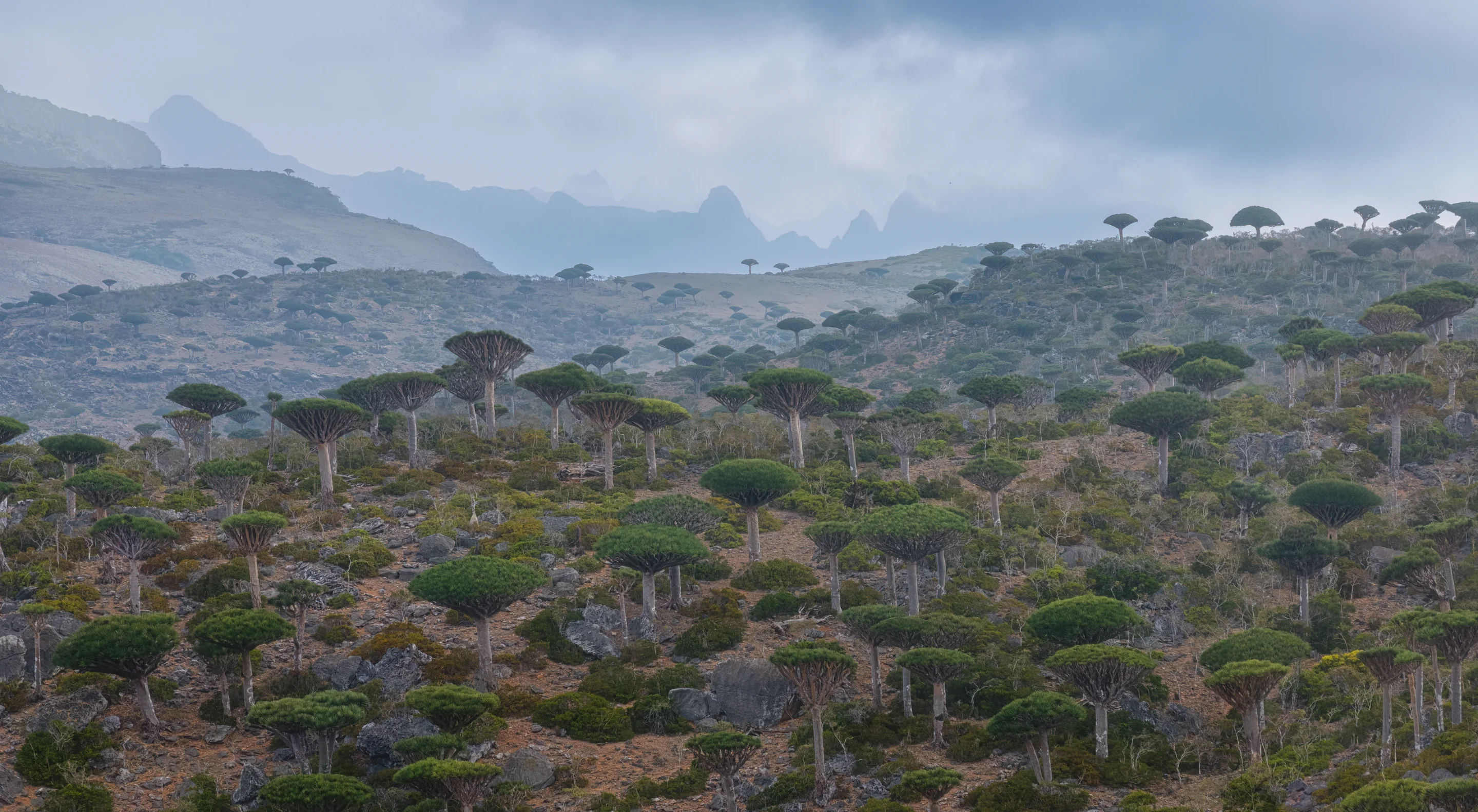
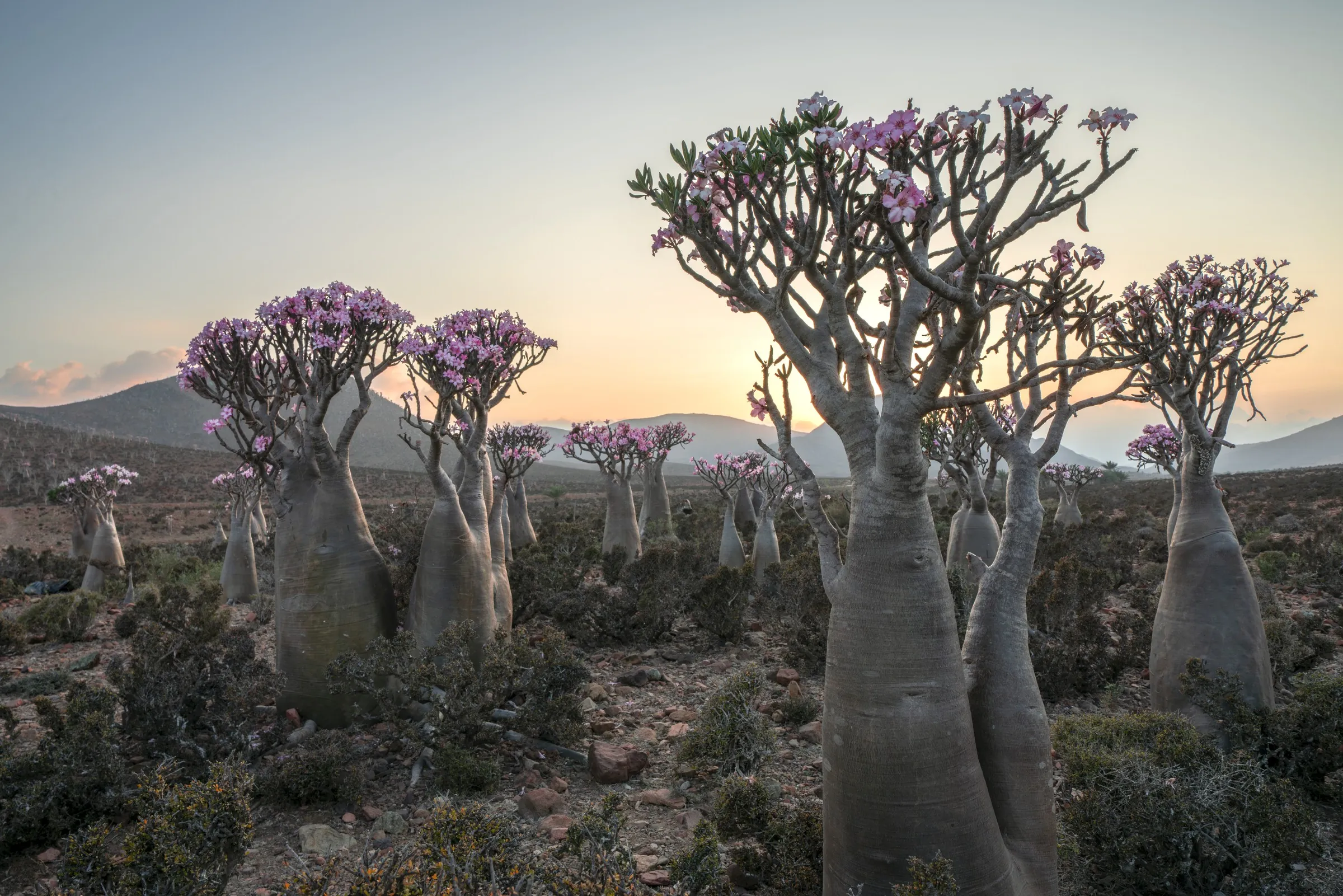
Over countless generations, the island’s plants and animals have evolved along their own distinctive paths, giving rise to an exceptionally rich and unique ecosystem. Dragon blood trees, desert roses and numerous endemic species create a natural landscape unlike that found in most other parts of the world.
The island’s appeal lies not only in its extraordinary landscapes and rare forms of life, but also in the unique world shaped by nature and human history over countless ages.
A World of Landscapes, from Coast to Mountain
Changes in terrain and elevation shape an island of remarkable natural diversity.
Coasts and the Ocean
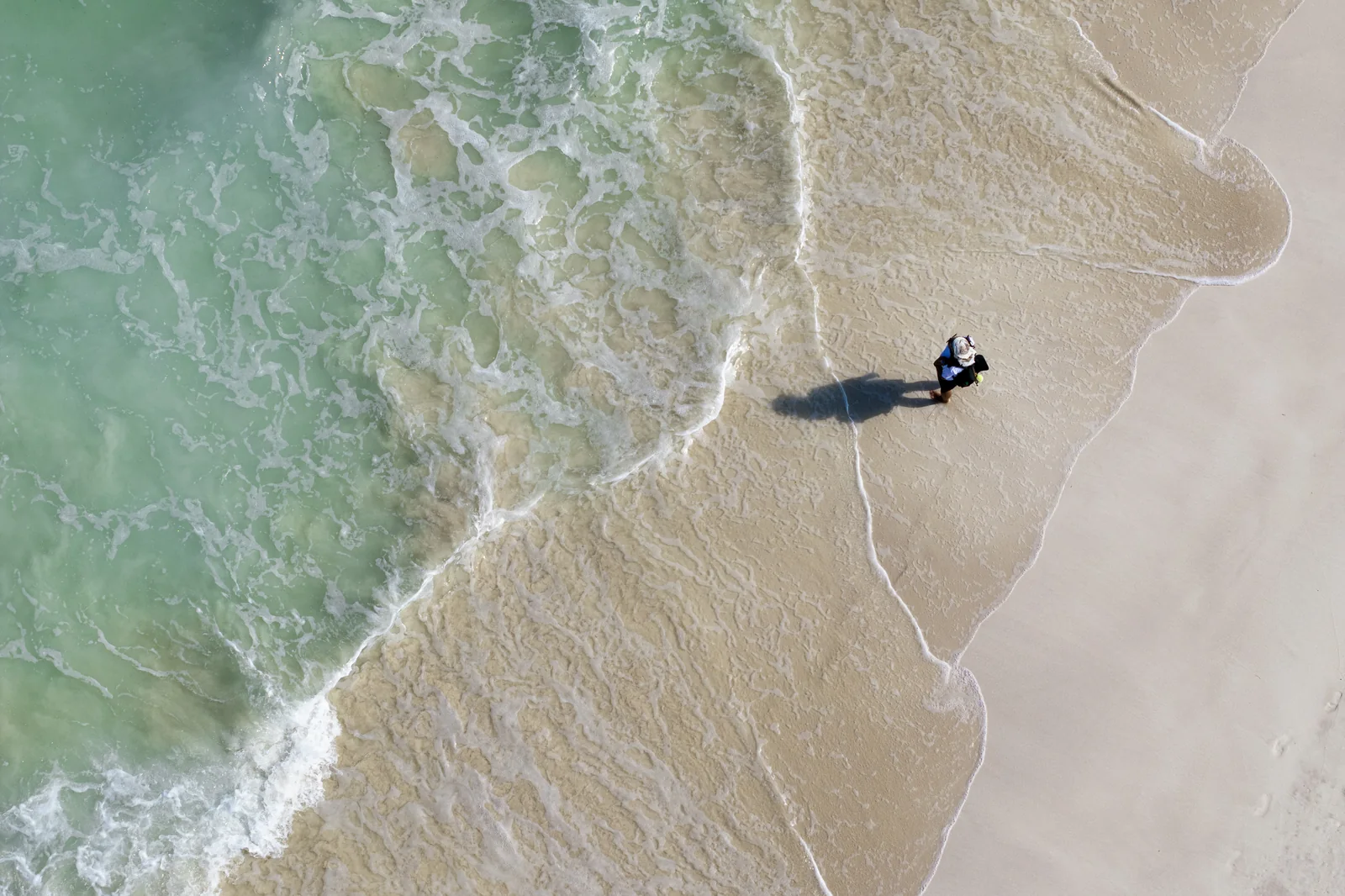
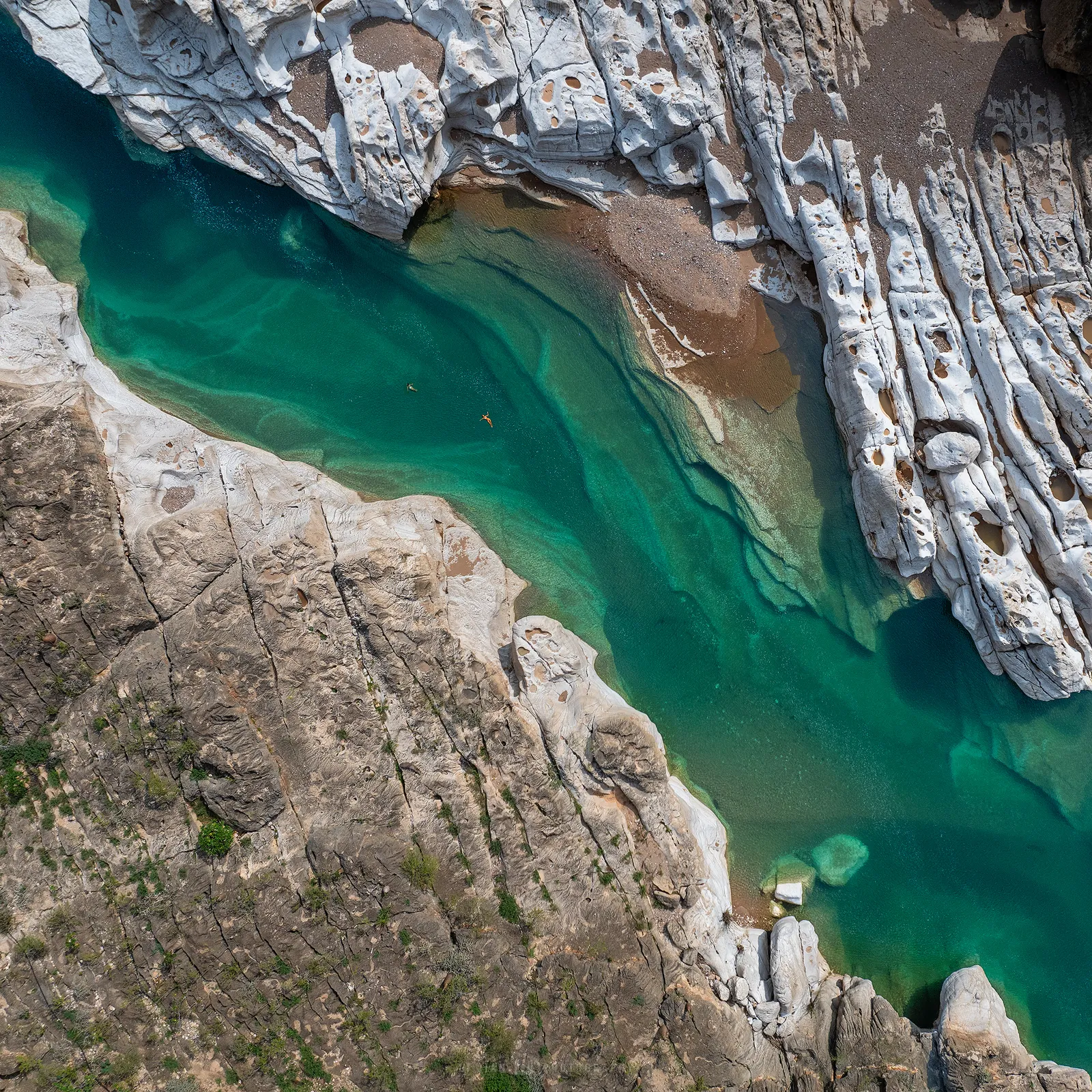
The ocean surrounds Socotra, creating a varied and captivating coastline. From open bays and white sandy beaches to shallow waters and coral reefs, the sea reveals different shades of blue as the light and ocean conditions change. Beyond defining the island’s natural boundaries, the surrounding waters support a rich marine ecosystem.
Coastal Plains and Sand Dunes
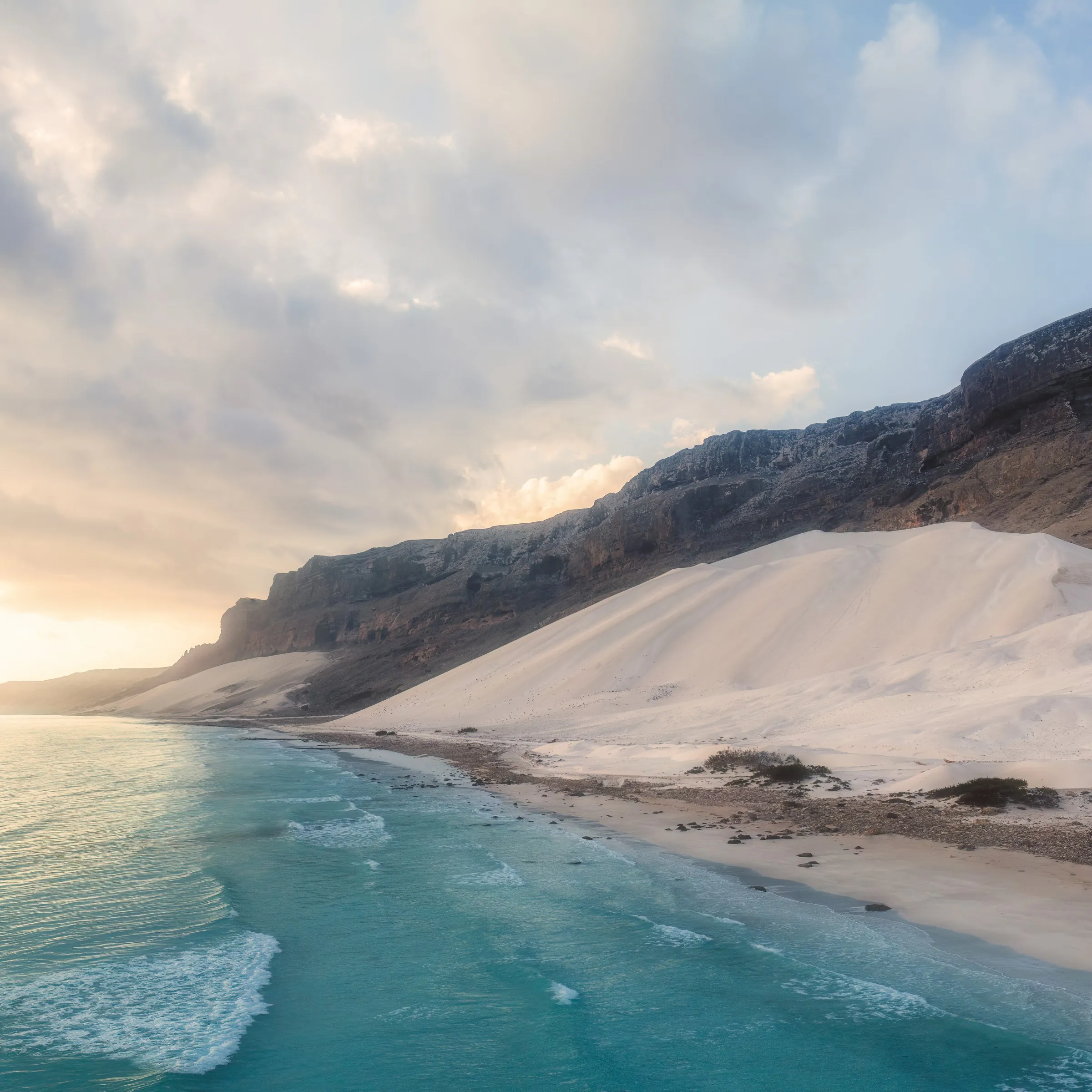
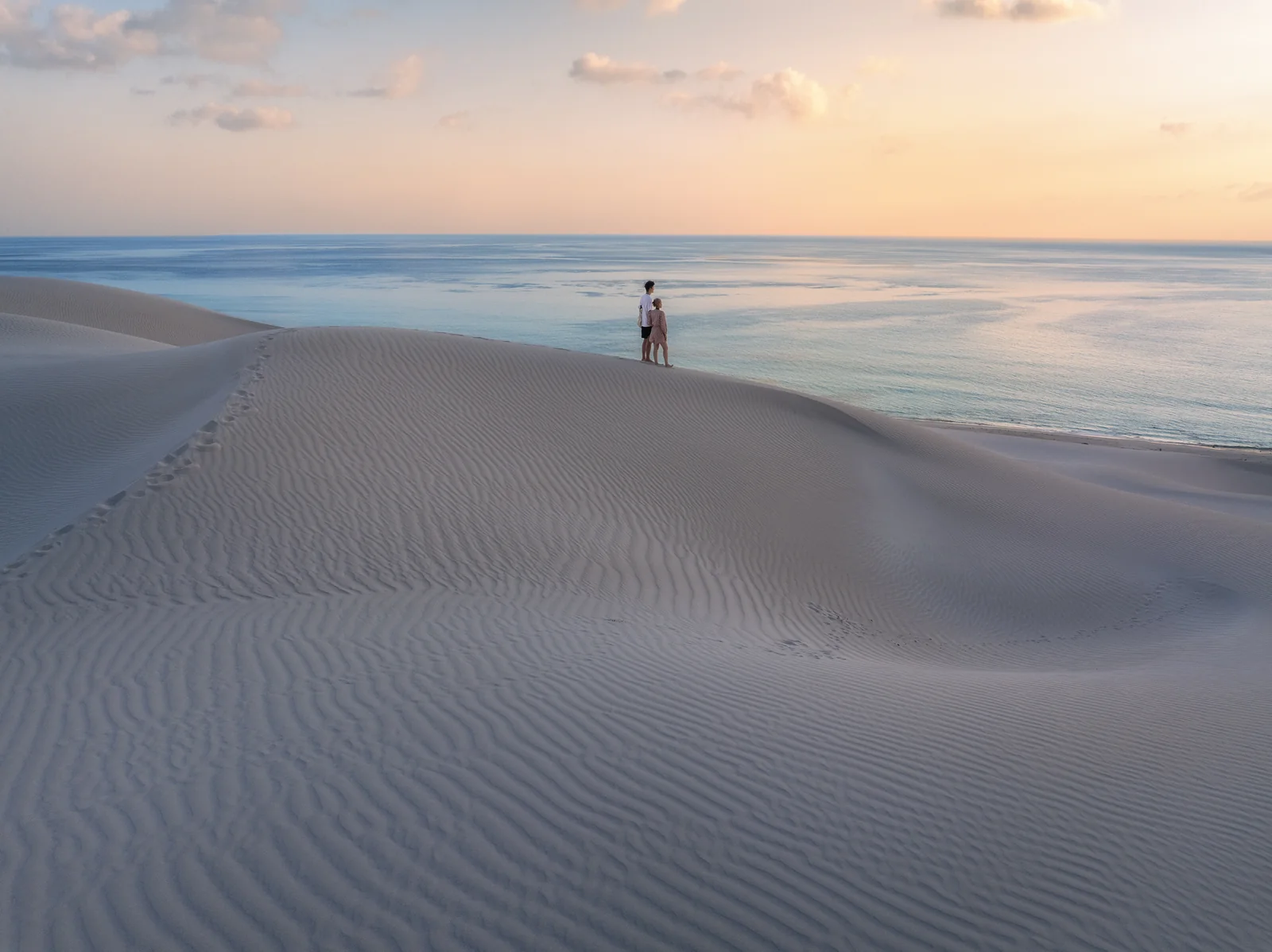
Coastal plains extend inland around the island, where low shrubs, grasslands and open sandy landscapes form a varied natural environment. Shaped by wind and seasonal changes, coastal dunes create ever-shifting contours, complementing the expansive plains and distant mountain ranges.
Plateaus and Canyons
Socotra’s limestone plateaus extend across the central, eastern and western parts of the island, each with its own distinctive terrain and vegetation. The Diksam Plateau is known for its deep canyons and dragon blood tree forests. The Momi Plateau features limestone hills and distinctive desert roses, while Homhil, in the northeast, brings together dragon blood trees, frankincense trees, desert roses and natural pools. Together, these plateaus, rocky formations and canyons define much of Socotra’s remarkable inland landscape.
Mountains and the Highest Peaks
The Haghier Mountains form the heart of Socotra’s highland landscape. Characterised by ancient granite formations, rugged ridges and towering peaks, the range rises to Jabal Skand, the island’s highest point at approximately 1,526 metres. Moisture carried by the monsoon winds interacts with the mountainous terrain, influencing cloud formation and rainfall, and creating highland ecosystems distinct from those of the coast and limestone plateaus.
One Island, Three Different Faces
Across the island’s east–west geography, Socotra’s principal landscapes can be broadly divided into three regions: east, central and west. Each region has its own emphasis, and together they reveal the island’s richness, from coast to interior and from natural landscapes to local life.
East | A Varied Landscape Where Mountains Meet the Sea
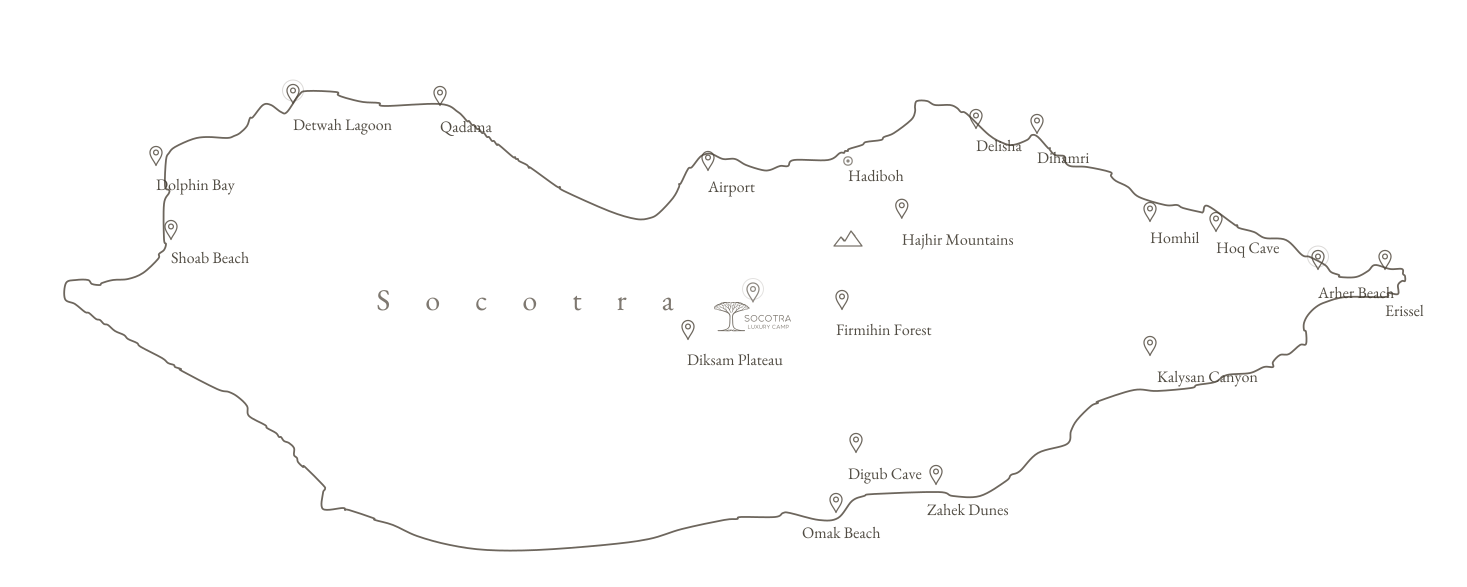
Eastern Socotra is remarkably varied. From the northeastern coast to the island’s eastern tip, mountains, limestone plateaus, bays and sand dunes overlap to create a landscape of striking depth and contrast.
Here, the towering white dunes and blue waters of Arher Beach give way inland to dragon blood trees, frankincense trees and desert roses on the Homhil Plateau. Farther east, the Momi Plateau reveals open limestone hills and a distinctive inland landscape, while Hoq Cave opens into vast subterranean spaces formed by the slow dissolution of limestone. The Dihamri Marine Protected Area also offers opportunities to observe coral reefs and marine life.
Coastal exploration, plateau hiking, cave visits and time on the water come together in eastern Socotra, making the region an essential part of any understanding of the island’s natural diversity.
Central | Plateau Forests and Mountain Canyons
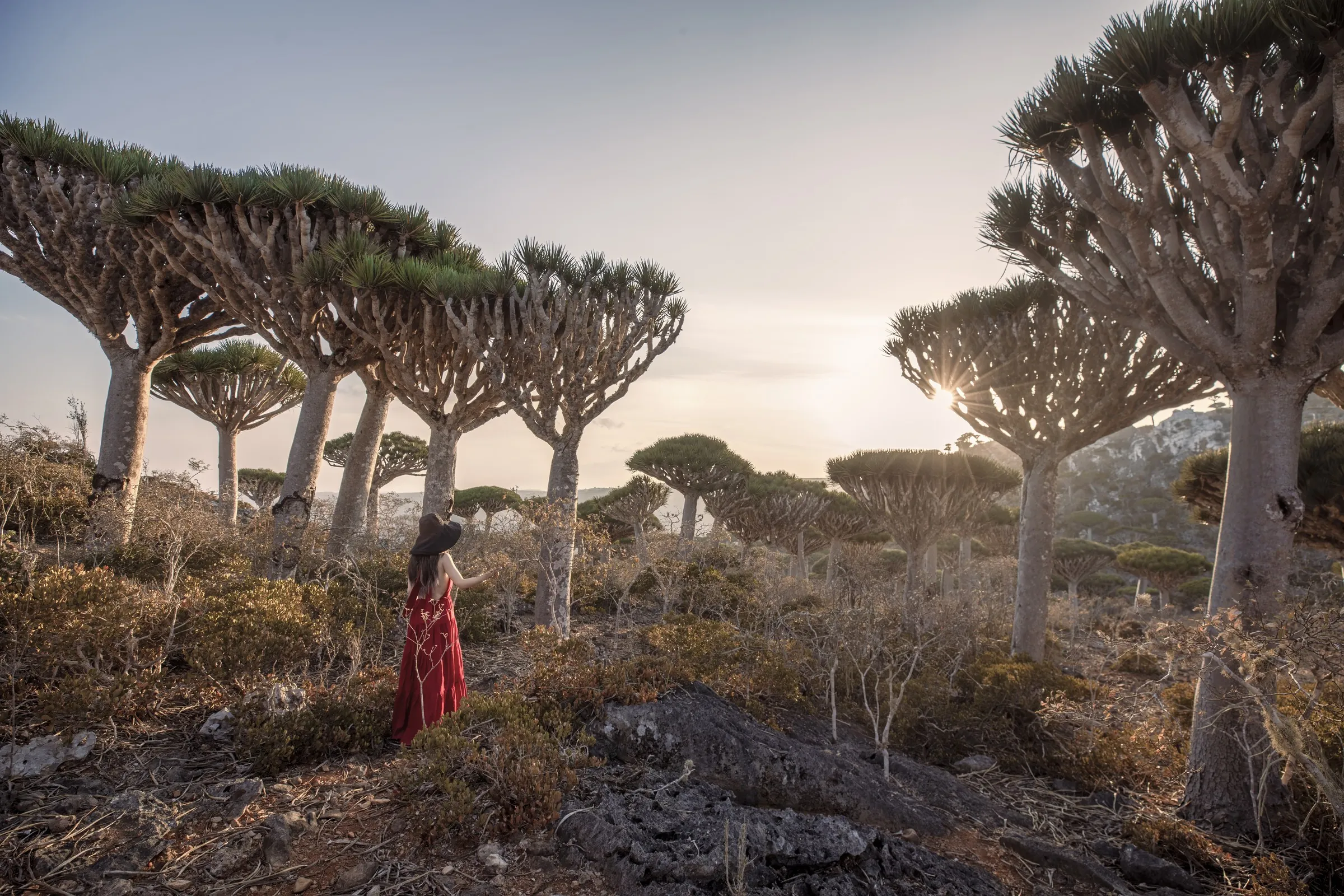
Central Socotra holds the island’s greatest concentration of plateau and mountain landscapes, including some of its most iconic plant communities.
The Diksam Plateau is known for its expansive limestone country and deep canyons, while the nearby Firmihin dragon blood forest preserves the island’s most representative stands of these trees. Deeper in the mountains, the Haghier range reveals granite peaks, rugged ridges and valleys, while Ayhaft Canyon presents another side of the landscape through streams, natural pools and rich mountain vegetation.
The marked changes in elevation and moisture create a range of plant habitats. From plateau forests to mountain canyons, central Socotra reveals the island’s richly layered interior and offers outstanding terrain for hiking, nature observation and photography.
West | Open Coast and Sheltered Bays
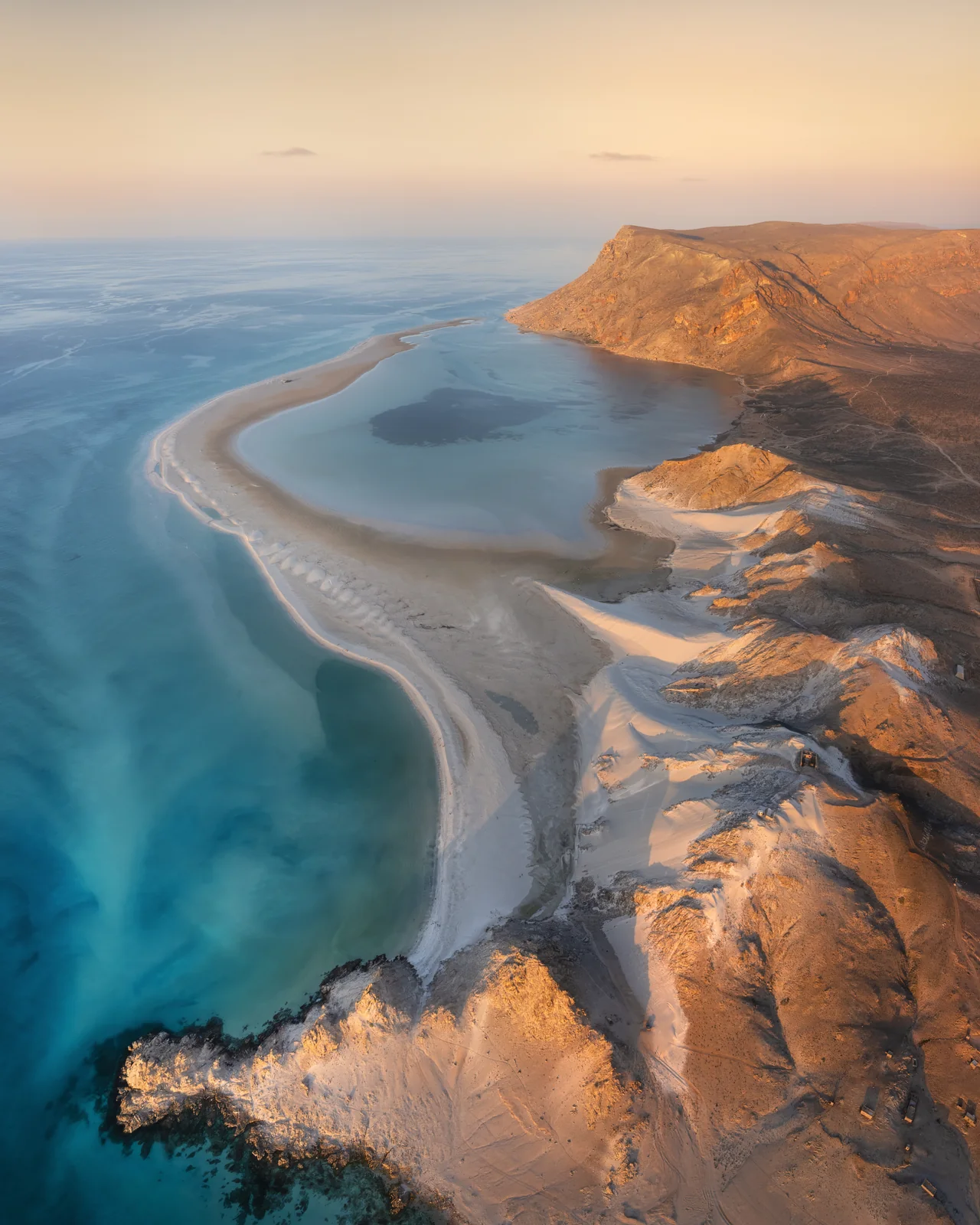
Western Socotra is defined by long open coastline, shallow lagoons and traditional fishing villages, giving the region a spacious and tranquil character.
Detwah Lagoon is its most representative natural landscape. White sandbars, water shifting between pale blue and turquoise, and distant mountains together form a coastline of remarkable clarity and identity. Nearby Qalansiyah retains the atmosphere of a traditional fishing village and offers a window into local maritime culture and everyday life.
From Qalansiyah, a boat crosses to Shuab Beach, where the sand and clear water are enclosed by coastal cliffs; dolphins and other marine life may also be seen along the way. Compared with exploring the plateaus and mountains, the west invites a slower pace and a closer sense of the relationship between its bays, the sea and island life.
Air, Water, Light and Space
A memory of an island comes not only from the landscapes before us. The movement of the wind, the scent of the sea, the shifting light and the vast openness of land and sky together create Socotra’s singular sensory experience.
Air | An Invisible Connection
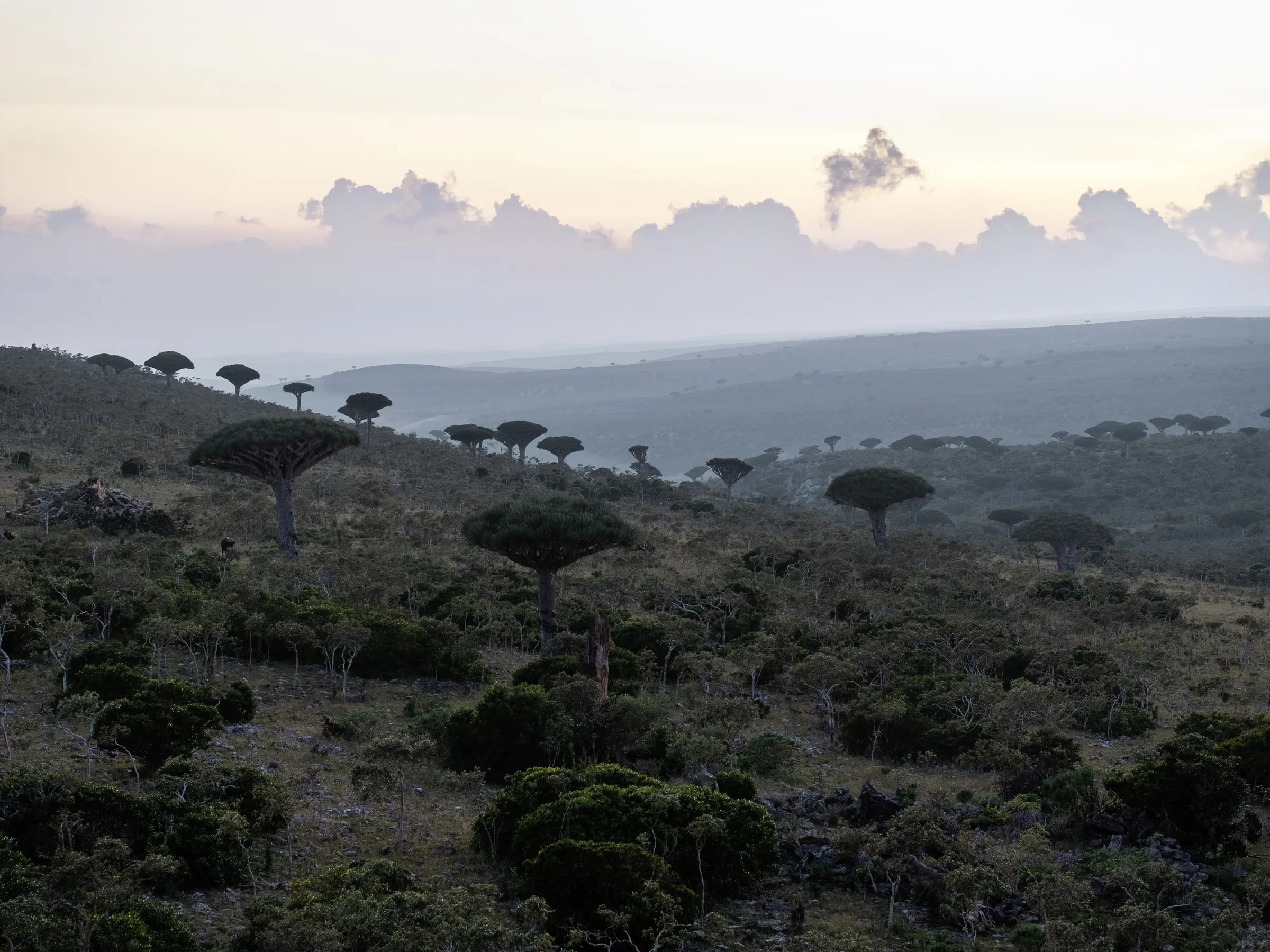
All things move and breathe in harmony. Every breath is a quiet resonance with the world around us. Invisible yet ever-present, the air flows through every part of Socotra. Sea breezes travel inland from the dunes and coastal plains of Arher Beach, passing through the dragon blood tree forests of the Diksam Plateau and across the ridges of the Haghier Mountains. As the terrain and elevation change, so do the direction of the wind, the movement of clouds and mist, and the character of the air. From the openness of the coast to the coolness of the mountains, each landscape reveals its own natural rhythm.
Far from major industrial areas and densely populated cities, the subtle changes in wind, clouds and sky become more perceptible. Air connects nature and life, allowing us, with every breath, to rediscover our connection to this island.
Water | The Power of Renewal
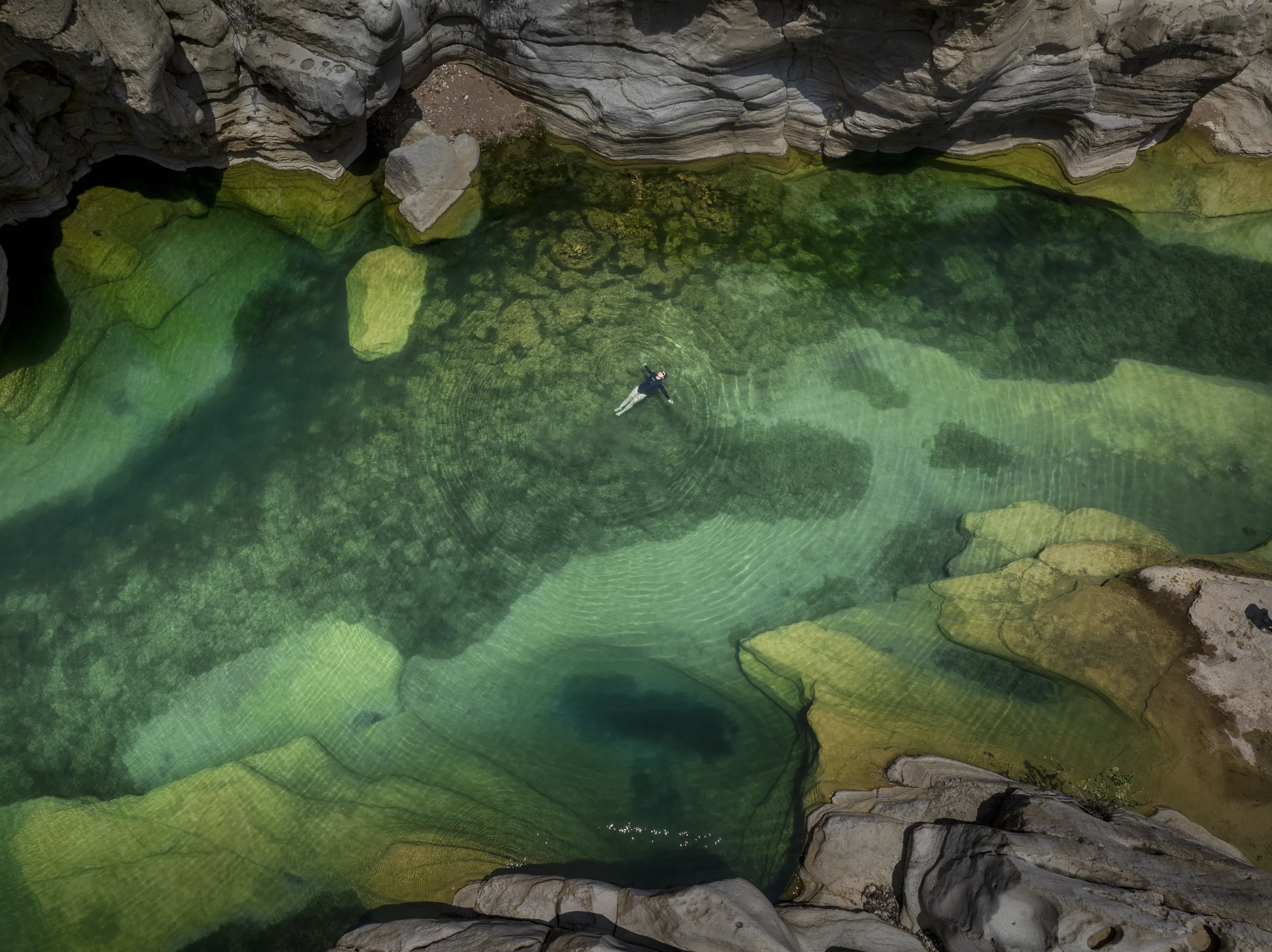
Water is both a source of life and a teacher of nature. The tides teach us rhythm, flowing water reveals the beauty of change, and the endless cycle of renewal sustains life. It symbolises new beginnings, wisdom and transformation, connecting the ocean, the land and all living things.
From the shimmering waters of Detwah Lagoon and Shu'ab Beach to the clear natural pools of Kalissan Canyon and Homhil, and the deep blue waters of Dihamri Marine Protected Area, water takes on many forms across Socotra. Here, vibrant marine worlds invite snorkelling and diving, while tidal flats, canyons and mountain pools reveal the island's ever-changing relationship with water.
At times vast and untamed, at others calm and serene, water brings vitality to the island. Through its gentle yet profound presence, it allows us to experience the rhythms of nature and the continuity of life.
Light | The Power of Illumination
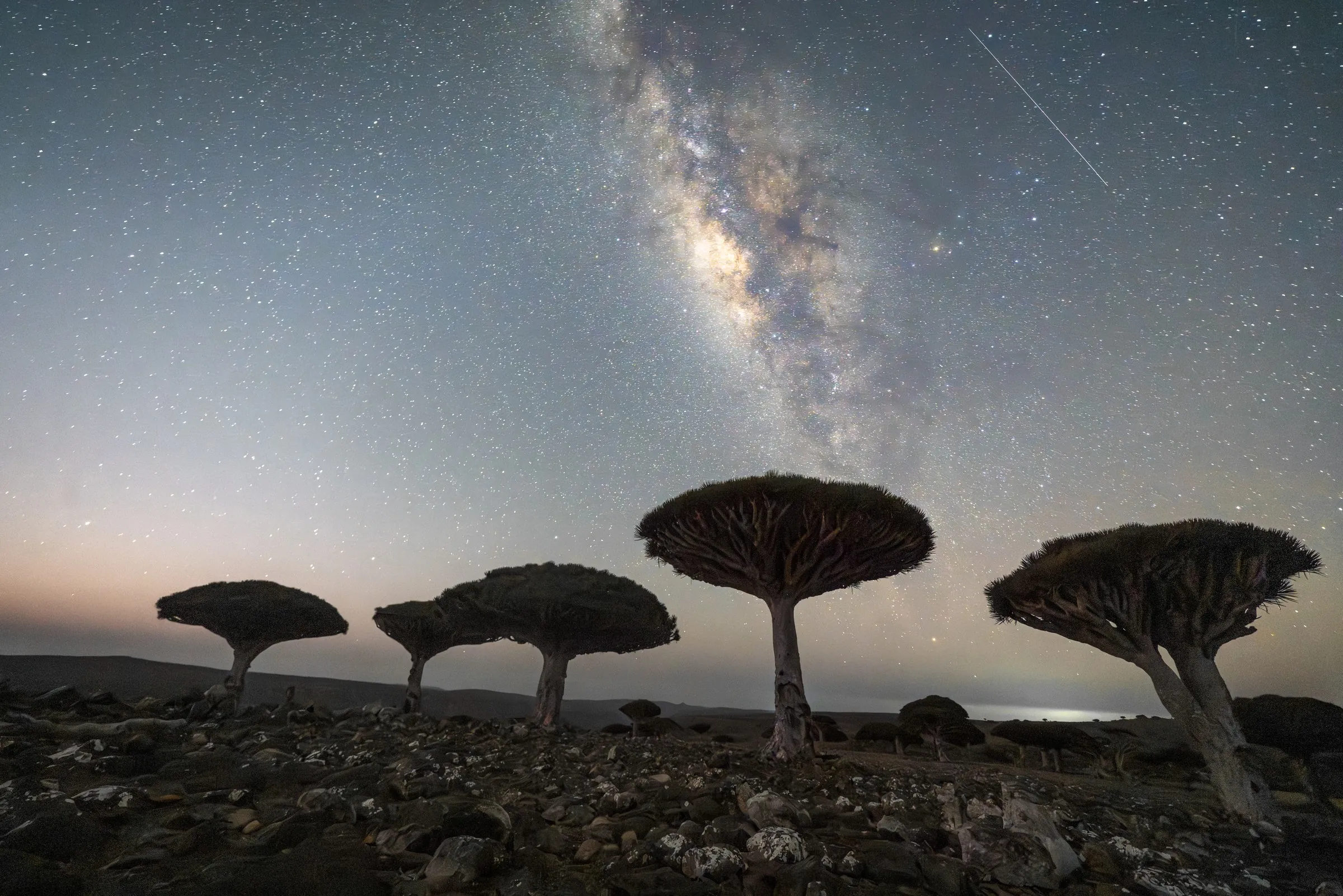
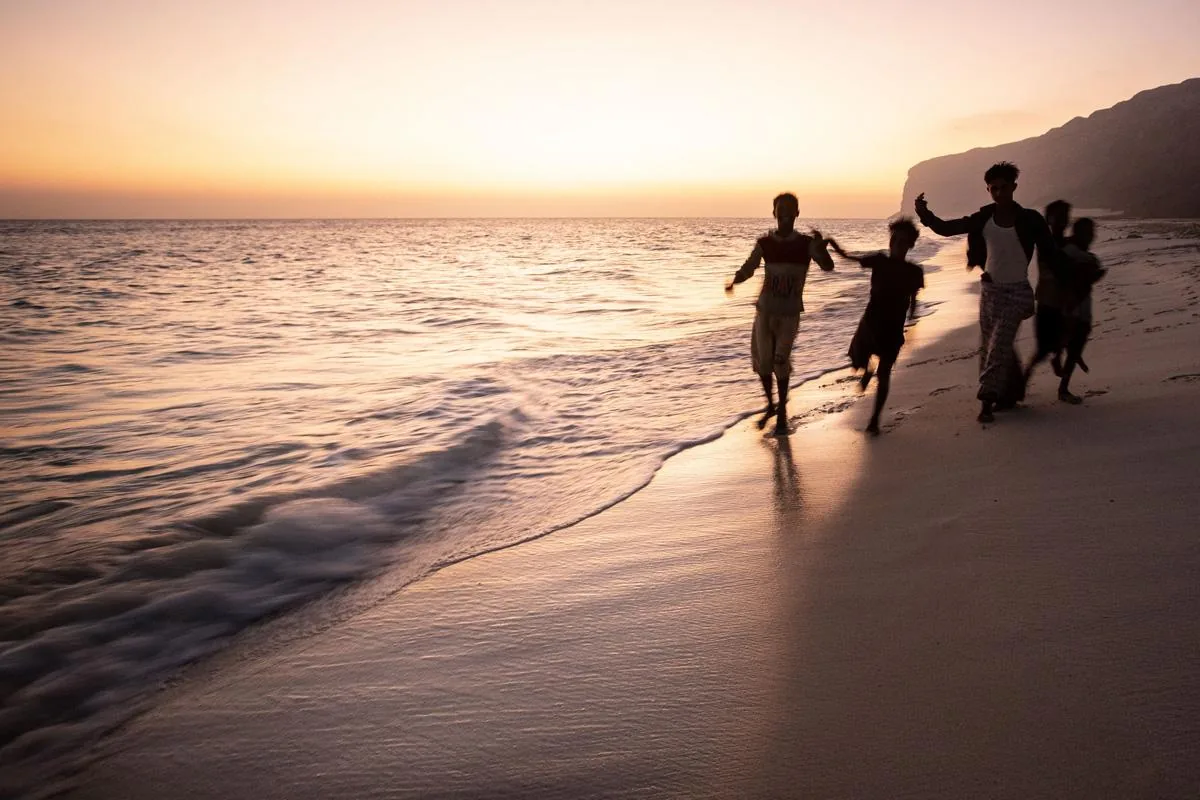
From the first light of dawn to the fading colours of dusk, light sets the rhythm of each day on the island. In the morning, sunlight filters through the dragon blood tree forests of Firmihin, casting soft patterns across ancient canopies and the forest floor. At sunset, the white sands and turquoise waters of Arher Beach take on warm golden hues. As night falls, the open skies above the Diksam Plateau reveal a beautiful display of stars and moonlight. Sunsets and night skies are shaped by the weather, cloud cover and lunar phases, making each encounter unique.
Light is also found in the warmth between people. The friendly eyes and genuine smiles of the local community make memories of Socotra about more than its landscapes. From dawn to nightfall, from the beauty of nature to the warmth of human connection, light reveals not only the island itself, but also a renewed appreciation for life.
Space | Freedom in Harmony
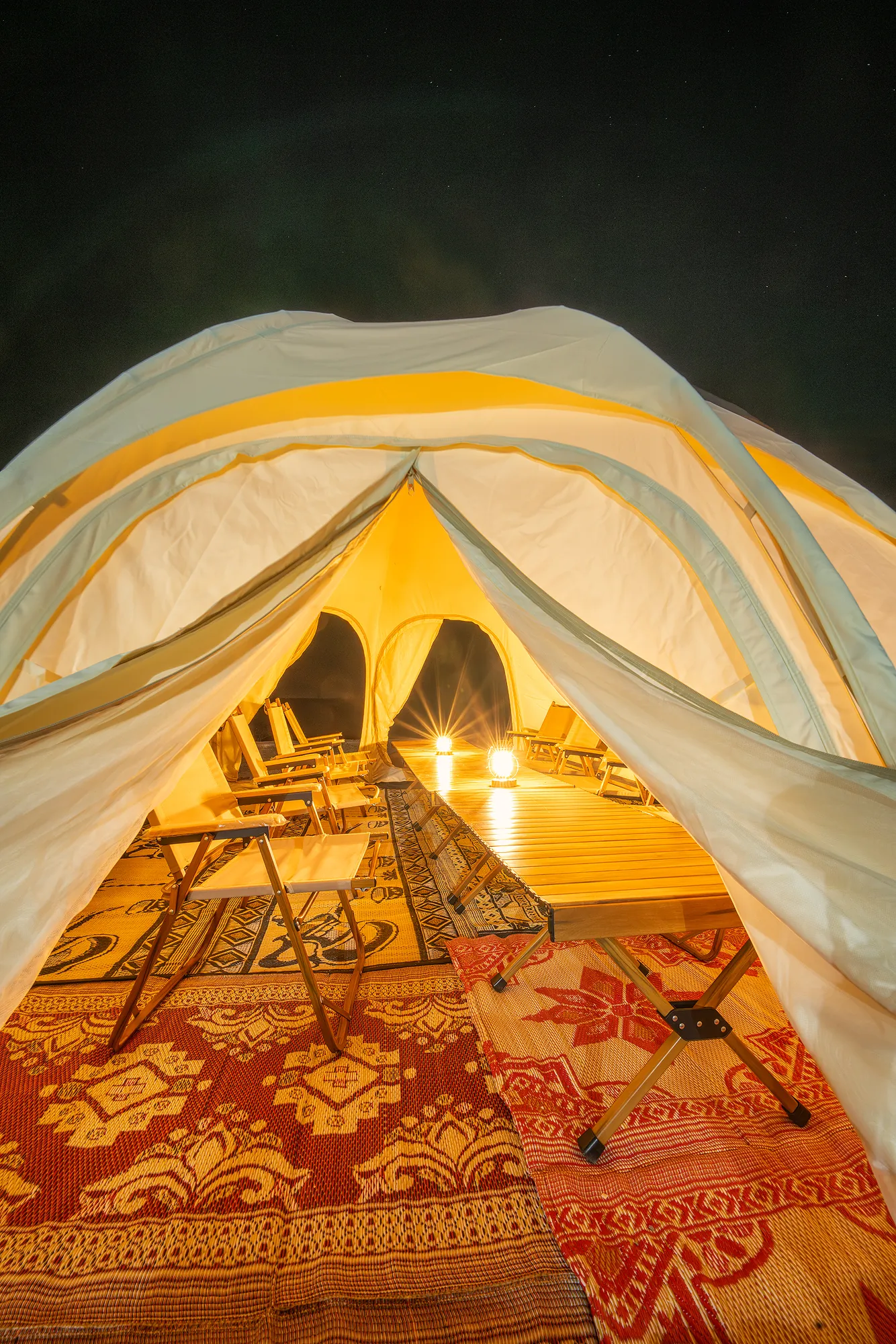
In Socotra, space unfolds across different scales and layers. From the privacy and comfort of our private tents, to the shared camp areas for dining, conversation and quiet reflection, and beyond to the vast dunes, coastlines, plateaus and mountains, intimacy and openness, stillness and activity exist in natural harmony. Set apart from the mainland, the island also retains a relatively isolated and distinctive natural environment.
Slide down the pristine white dunes of Arher Beach, letting the fine sand slip through your fingers; or stand beneath the dragon blood trees of the Diksam Plateau, gazing towards the distant ridges of the Haghier Mountains. In these spaces, where people and nature coexist in harmony, we can leave behind the noise and routines of city life and rediscover a sense of inner calm, ease and freedom beneath the open sky.
How Life Adapts
In their natural environment, plants have evolved distinctive ways of surviving and now face new challenges.
Socotra has an arid climate, with limited rainfall strongly influenced by the monsoon. Along the coastal plains and across parts of the plateaus in particular, dry seasons are long, and rainwater readily seeps into limestone formations, making it difficult for stable surface-water sources to form. This distinctive natural environment has given rise to a rich variety of endemic plants, many of which have evolved special forms and survival mechanisms adapted to arid conditions. How they capture, absorb and retain limited moisture is central to their ability to survive.
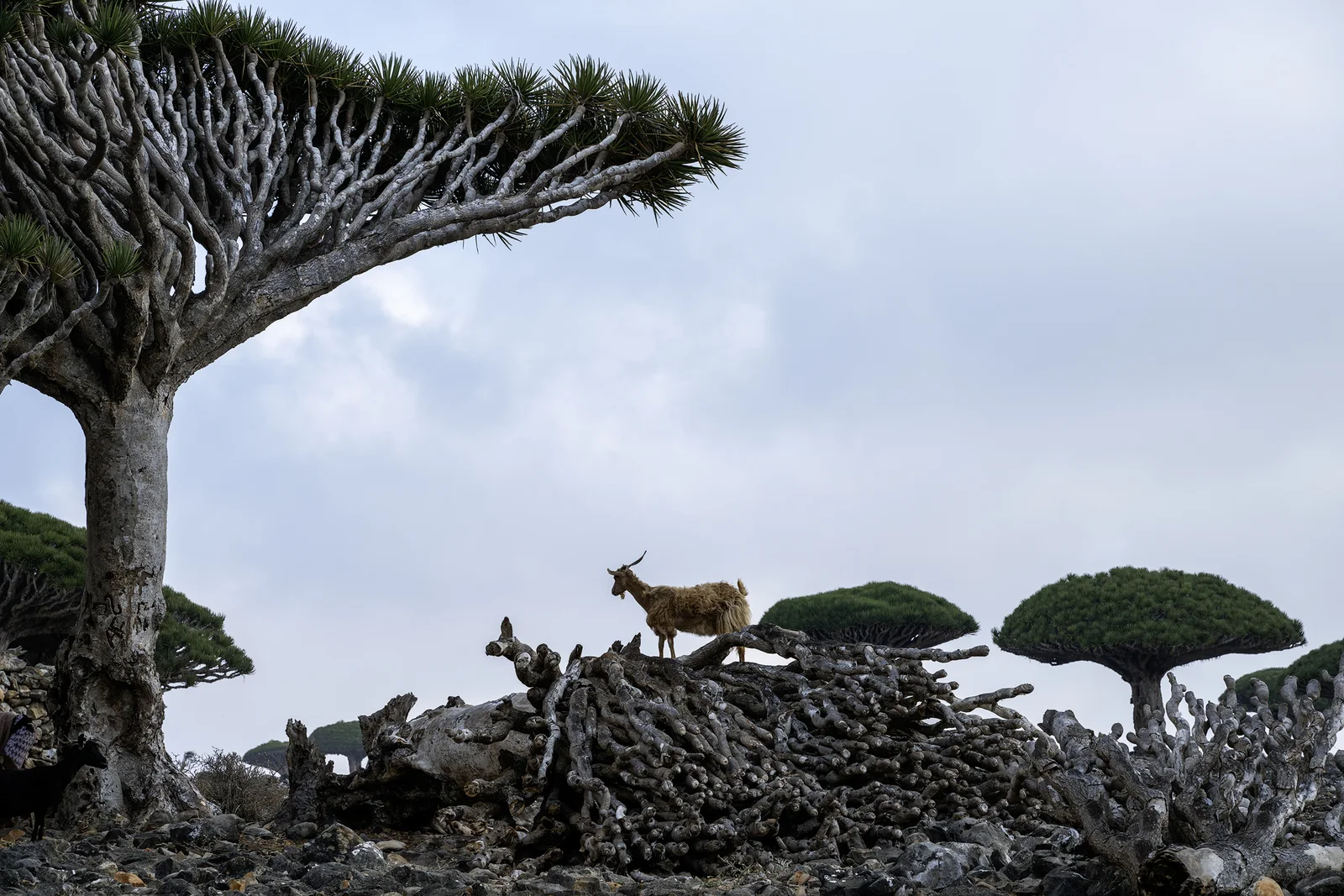
Dragon Blood Tree | Capturing Mist, Extending Roots
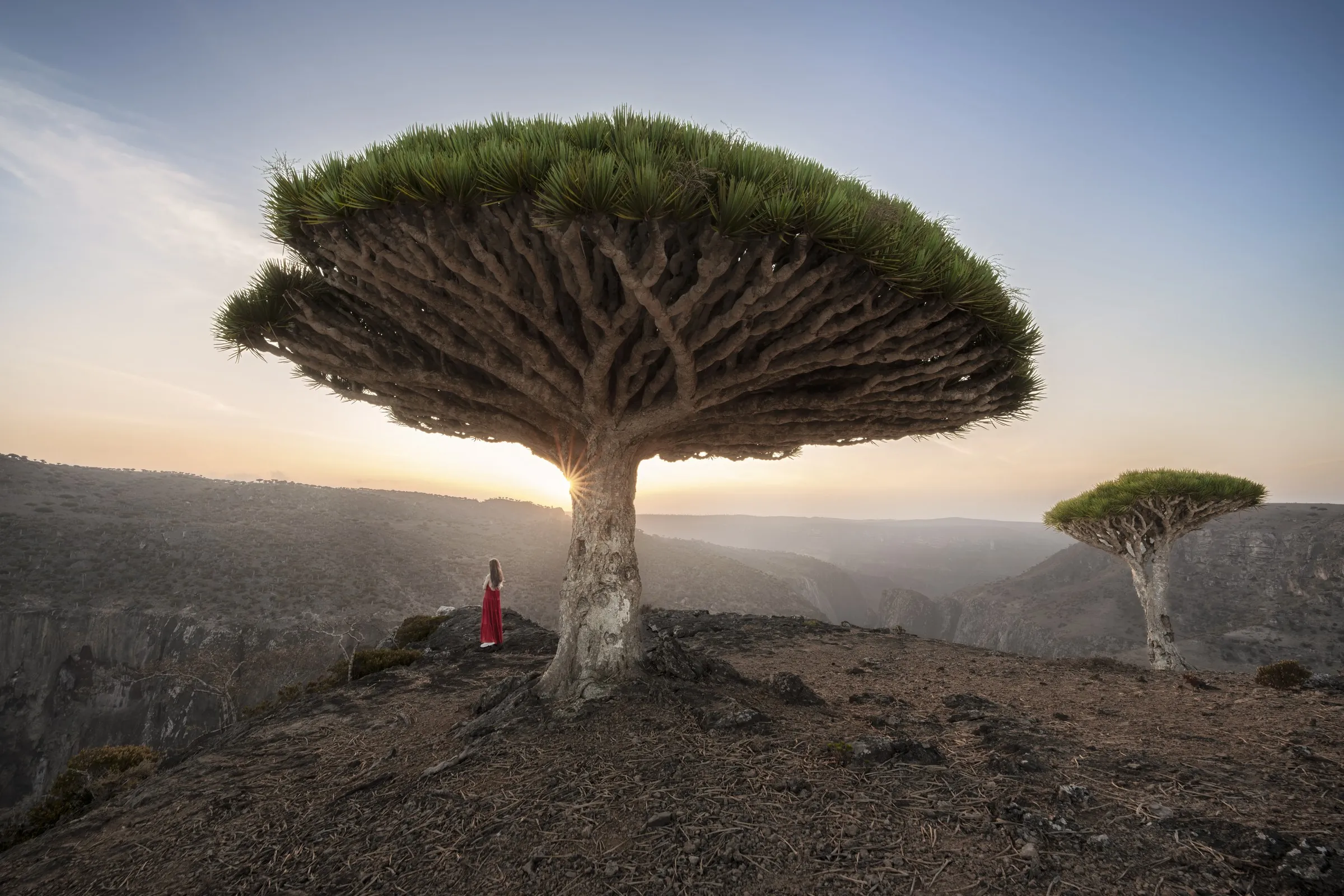
The dragon blood tree's umbrella-shaped crown can intercept mist, gathering moisture along its leaves and branches before channeling it into the tree. Its extensive root system also helps it absorb water from the soil.
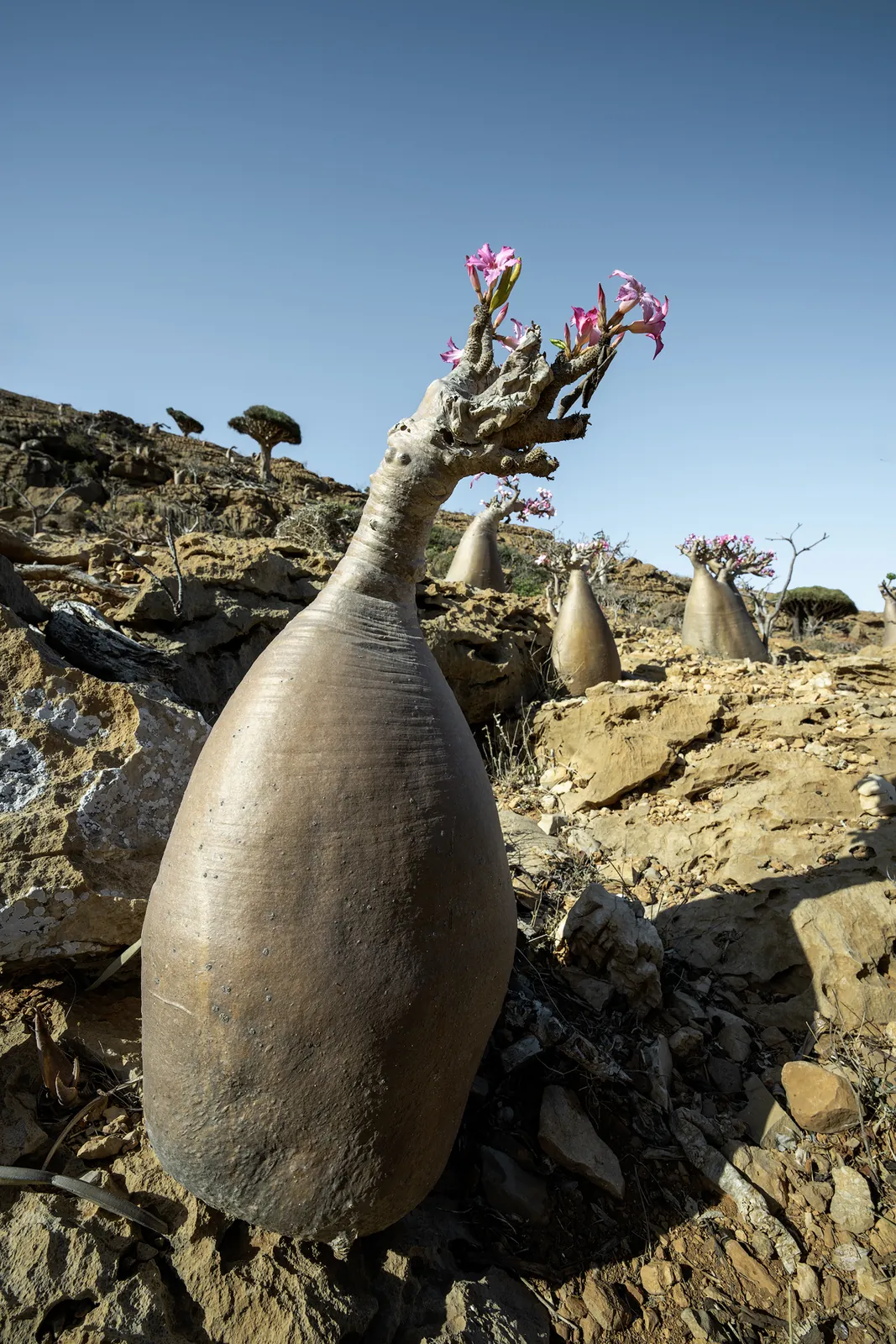
Bottle Tree | Extensive Roots, Stored Water
The bottle tree absorbs water through its roots and stores it in its swollen trunk, helping it endure long dry seasons.
Wind, Goats and Forest Regeneration
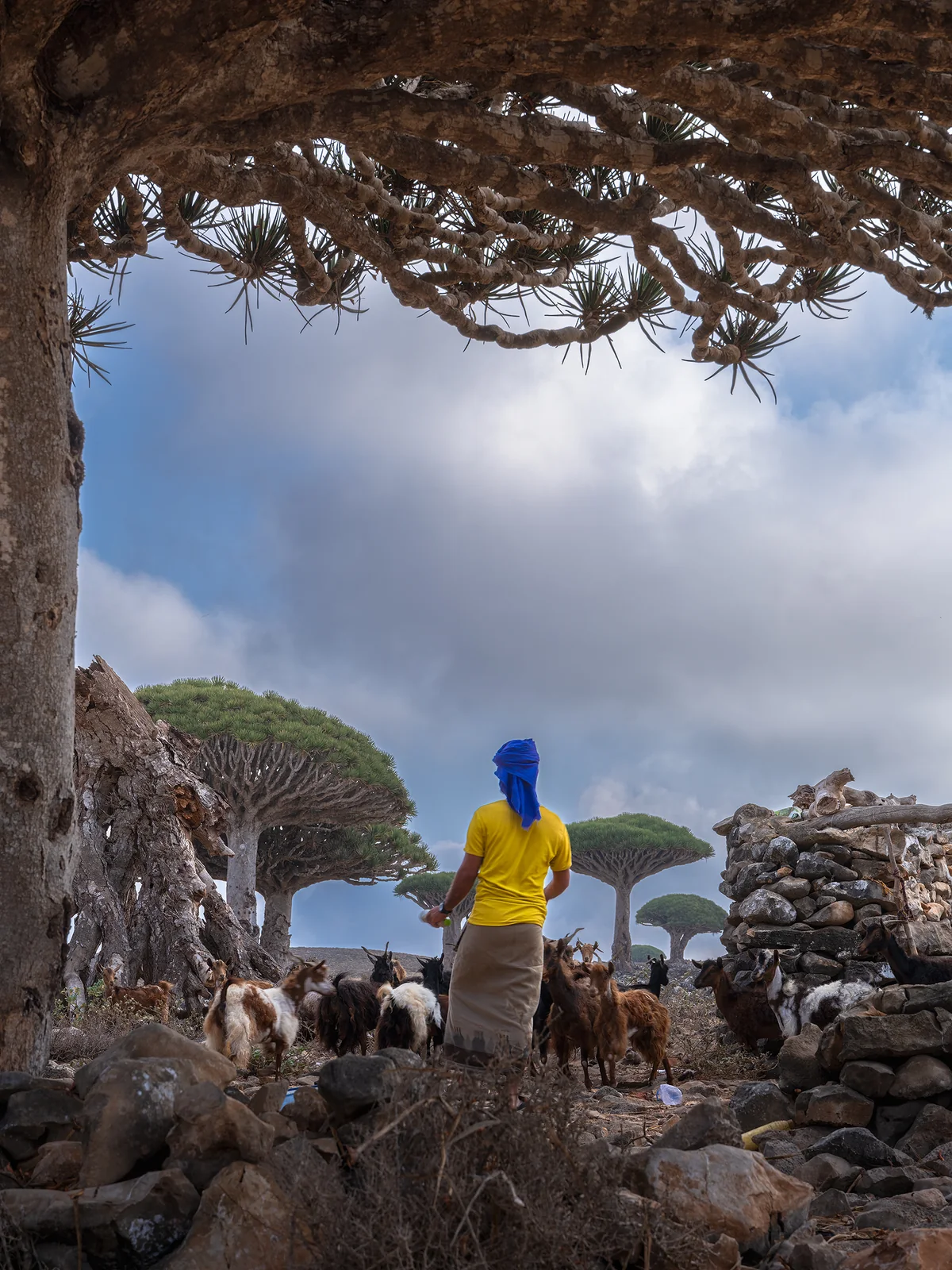
Strong monsoon winds can break or topple some older dragon blood trees, while goats continually browse on young shoots and seedlings, further affecting the forest's natural regeneration.
Dragon blood trees grow slowly, and seedlings struggle to survive repeated browsing. In some areas, mature trees still stand, yet younger trees are failing to replace them.
Promoting the natural regeneration of dragon blood forests while supporting traditional grazing and community livelihoods is a long-term challenge for conservation on Socotra.
How People and Nature Live Together
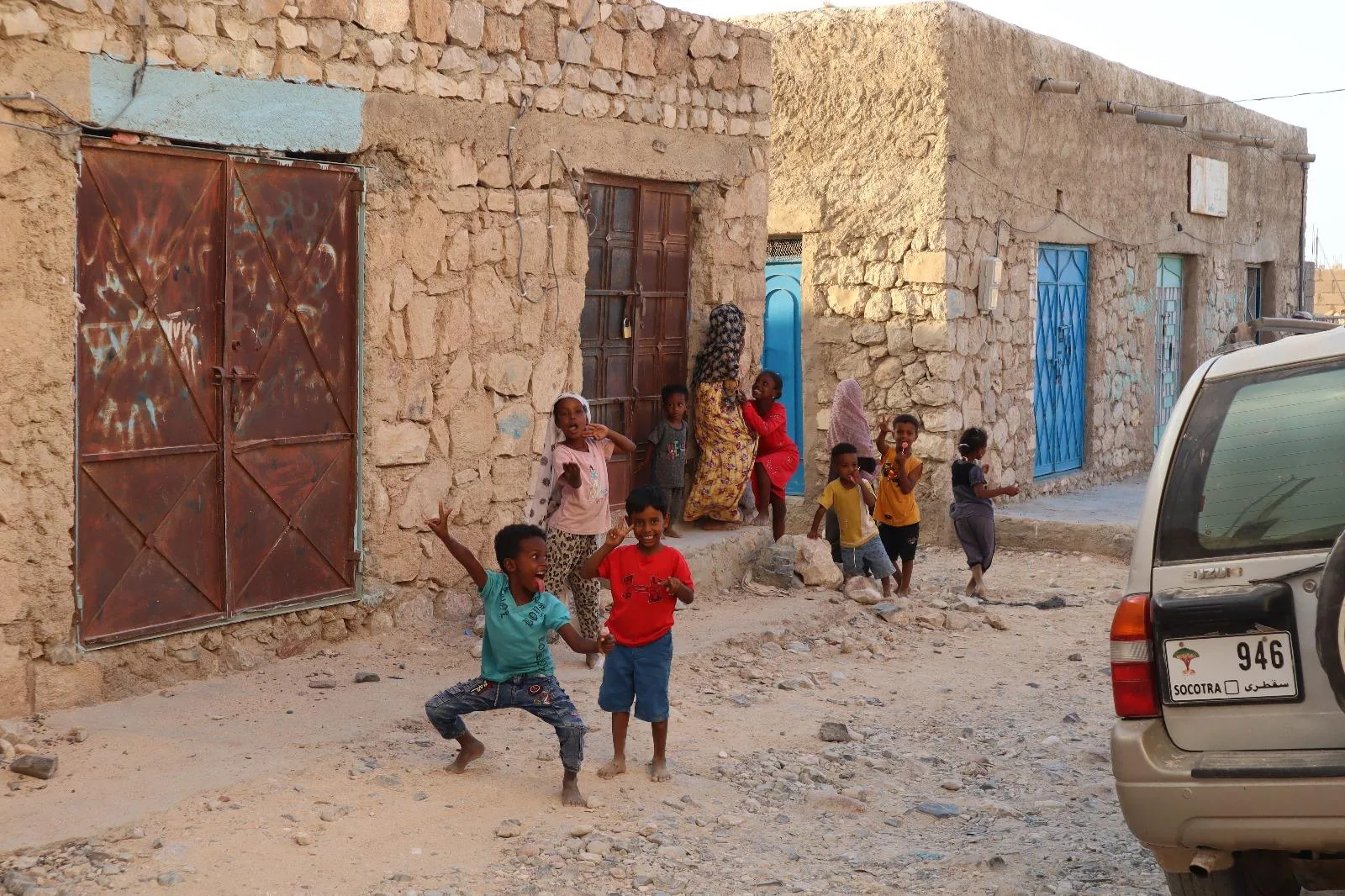
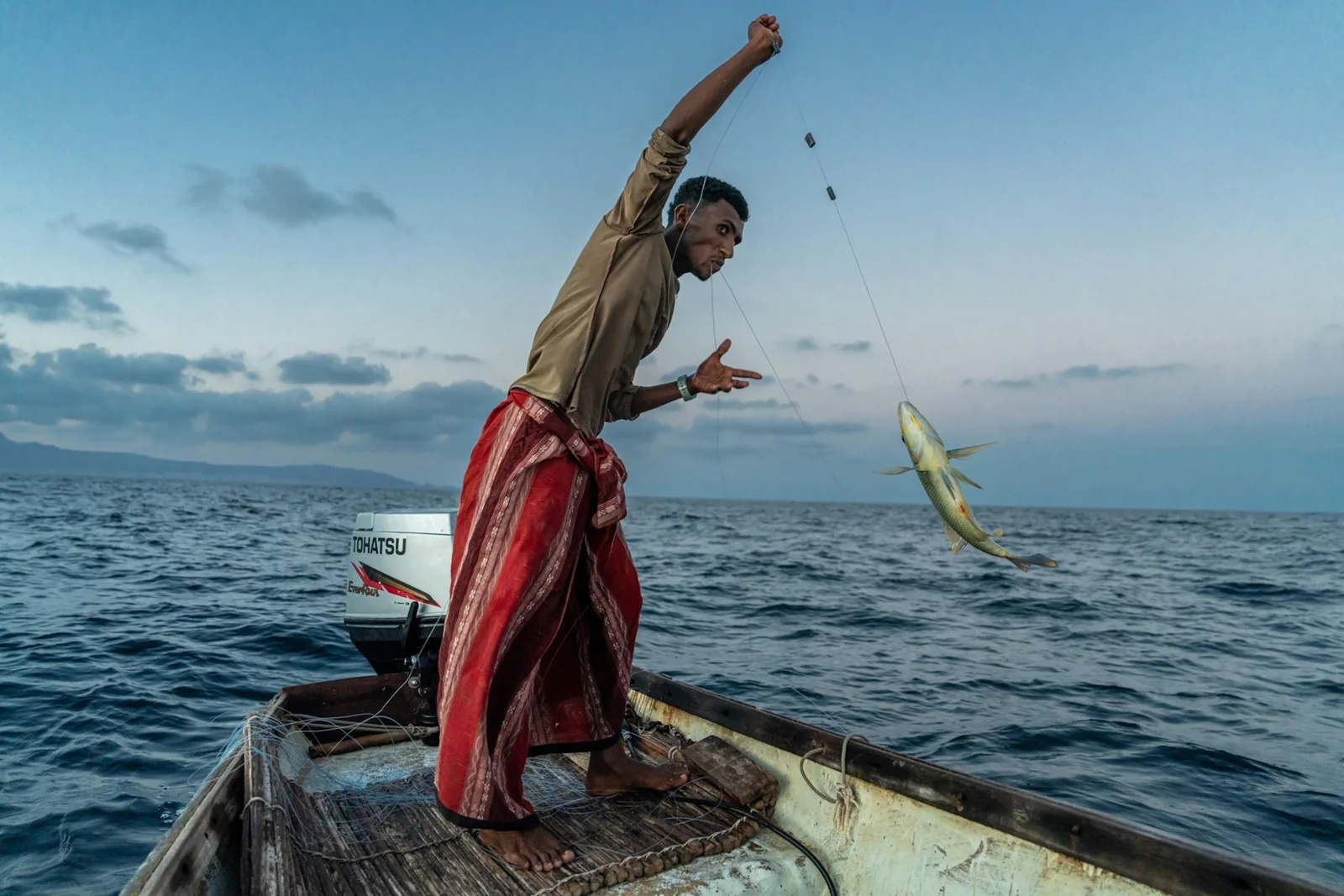
Life on Socotra is closely intertwined with the natural environment. Villages and families shape the spaces of everyday life, while fishing and herding sustain traditional livelihoods. Food and the shared table carry the bonds of family and community. Nature here exists not only in the wilderness, but is woven into local ways of life and cultural traditions.
Nature’s Continuity Requires Everyone’s Participation
Socotra’s natural beauty is not inexhaustible. We believe that travel should be more than appreciating and experiencing this land: it should also respect its natural rhythms, understand local communities’ ways of life, and minimise its impact on the environment. Only when travel, conservation and community development support one another can the island’s extraordinary living world endure for generations to come.
Growing Together with Nature and Local Communities
Creating value through travel while helping secure a more sustainable future for this island.
Socotra’s unique natural environment is closely connected to the lives of its people. We believe that meaningful travel is not only about appreciating the beauty of nature, but also about respecting the land and the communities who call it home.
We are guided by the principle: “Leave Nothing Behind but Memories.” We explore with respect for nature, leaving no litter, taking no plants and disturbing no wildlife. We also prioritise employing local people, expanding experiences and services delivered by local communities, and providing fair and reasonable pay, so that more of the benefits of tourism reach the people who live here.
Through travel, we hope to respect nature, create more opportunities for local communities and help preserve what makes Socotra so unique for generations to come.